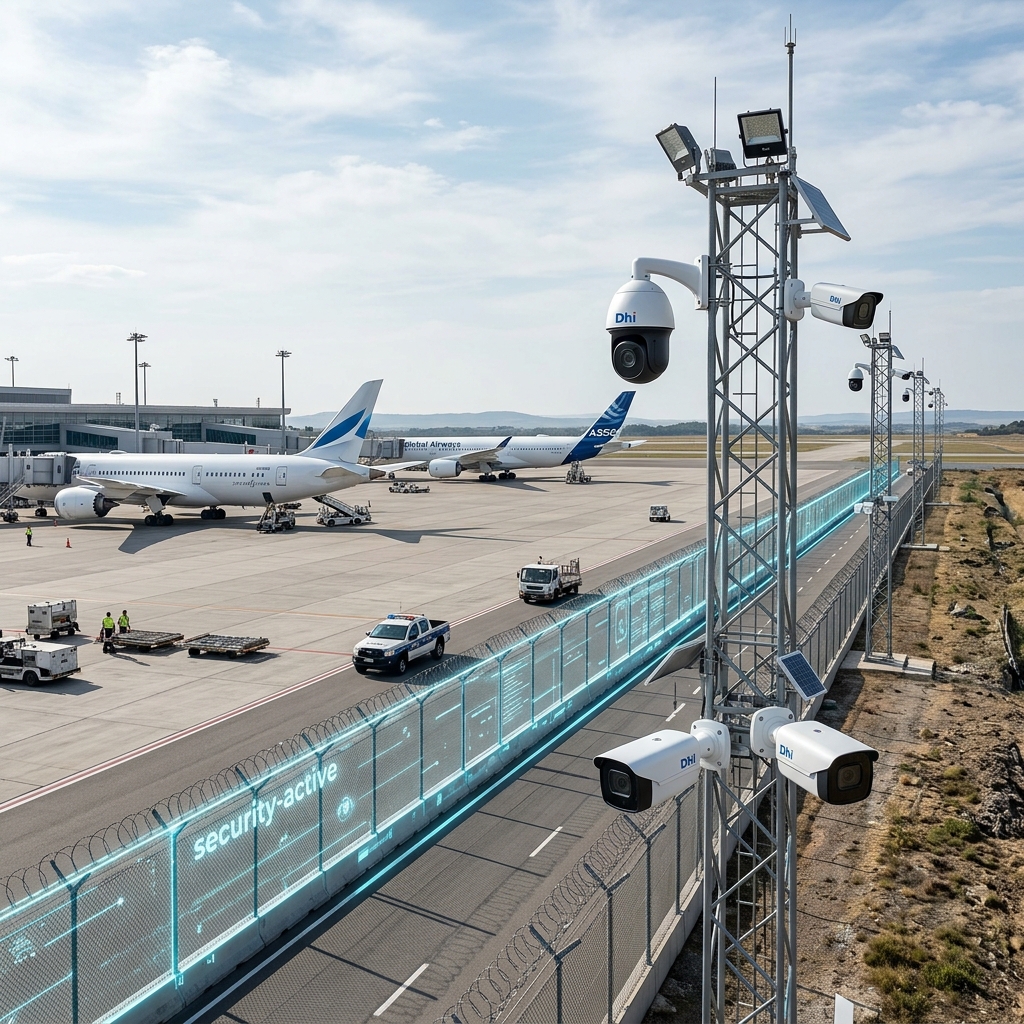
Government Safety AI
DHI helps public agencies and civic campuses add real-time safety intelligence to existing cameras without sending raw footage to a third-party cloud. Detect restricted access, crowd buildup, person-down events, and facility risk while keeping the VMS and data controls in government hands.
Deployment Context
Government Safety AI requires environment fit and immediate proof of value.
Verify how DHI integrates with your specific camera estate and VMS workflow before any on-site deployment happens.
Agency control
Government reviewers can keep raw camera feeds inside the agency environment while DHI creates structured safety events for approved workflows.
Portfolio rollout
Start with a city hall lobby, court corridor, service center, depot gate, or public counter, then reuse the approved pattern across similar buildings.
Policy record
Define event type, access, retention, clip approval, and escalation before the pilot so facilities, security, IT, and procurement review the same facts.
Public-space fit
DHI is best scoped around public-facing zones where queue buildup, restricted access, or a person-down event needs fast triage.
Response owner
Each alert should map to an agency team, such as facilities, security, dispatch, visitor services, or building operations.
Direct answer
How should public agencies evaluate DHI for government facilities?
Public agencies should evaluate DHI as a local safety-intelligence layer for approved cameras, not as a replacement for the VMS or access-control stack. The first pilot should prove one measurable workflow in one facility, with clear data boundaries and a documented response owner.
Facility fit
The strongest first scope is a lobby, service counter, restricted corridor, parking connection, or loading area where the agency already has cameras and a known safety concern.
Governance fit
Public-sector review should define what event metadata is created, who can access it, how clips are approved, and where raw video remains.
Portfolio fit
A narrow pilot can create a repeatable pattern for other public buildings without forcing every facility into the same camera, VMS, or cloud model.
Procurement fit
The pilot should produce a clear implementation note for security, facilities, IT, and procurement before any broader rollout.
Pilot assumptions to validate
- The agency chooses an approved camera zone with a documented safety or security problem.
- Data retention, access, and clip export rules are written before deployment.
- The alert recipient and escalation path are defined for each event type.
Public facility risk
Government buyers need safety intelligence they can explain and control.
Public agencies cannot buy a black box that moves civic video into a cloud they do not control. DHI is built for local processing, clear event records, and integration with the camera and VMS systems already approved by the facility team.
Many buildings, uneven staffing
A civic portfolio can span offices, courts, libraries, permit counters, service centers, public works depots, and council buildings with limited monitoring staff.
Procurement needs clear fit
The strongest starting point is a defined pilot zone with existing cameras, a known escalation path, and a measurable safety problem.
Public trust depends on boundaries
On-site inference and event-only routing make it easier to explain what data moves, what stays local, who controls access, and why the alert exists.
High-risk zones
Where the first pilot should prove value.
Public lobbies
Where queues, visitor movement, and security events need fast triage.
Service counters
Where staff-facing safety risk and crowd buildup can be visible before formal escalation.
Council chambers
Where public meetings, crowd movement, and visitor flow can require situational awareness without changing the meeting workflow.
Restricted corridors
Where unauthorized movement should route directly into the existing security workflow.
Parking and loading areas
Where vehicle movement, deliveries, and lower visibility can create safety blind spots.
Transit-adjacent facilities
Where public movement from stations, stops, and civic spaces overlaps.
Emergency assembly areas
Where crowd density and movement can affect response during drills or real events.
Edge AI Capabilities
Neural models operating natively on the NVIDIA Jetson platform, delivering real-time safety signals without cloud dependency.
Public Building Monitoring
Detect unsafe movement, restricted access, crowd buildup, and person-down events across lobbies, corridors, plazas, and service entrances.
Crowd and Queue Awareness
Surface density, bottlenecks, and surge conditions in high-traffic civic spaces before staff are forced into reactive crowd control.
Local Processing for Public Trust
Keep raw video within the agency environment and send only policy-approved safety metadata into the existing VMS workflow.
Deployment model
Prove value in one public facility before expanding across the portfolio.
A government pilot should keep the first scope narrow, documented, and easy for facilities, security, IT, and procurement to review.
Select one building or zone
Choose a known risk area where existing cameras already provide coverage and the response owner is clear.
Confirm integration path
Route safety events into the current VMS and dispatch workflow rather than asking staff to monitor another application.
Document policy boundaries
Define retention, access, event metadata, clip approval, and local processing rules before the pilot begins.
Pilot KPIs
Metrics a safety team can defend.
Public facility pilots fail when alerts have no defined recipient or action path.
The first deployment should prove the model on camera views that already support operational review.
Public-sector deployments need a plain explanation of where video stays and what event data moves.
Edge Integrity & VMS Native Integration
DHI transforms existing IP cameras into intelligent safety sensors. We deliver alerts natively into Milestone and Genetec, requiring zero additional cloud bandwidth.
NVIDIA Jetson AGX
Localized compute executes complex skeletal and object models at the source. Eliminate the cost and latency of cloud streaming.
Native Alert Protocol
Events stream as standard ONVIF metadata. Operators receive alerts in their existing dashboards without learning new software.
Air-Gapped Privacy
Raw CCTV footage never touches the public internet. Only safety metadata leaves the node, maintaining perfect data sovereignty.
Continue Exploring
Security and privacy posture
Review local video processing, retention boundaries, and event metadata handling.
Axis camera integration
Use existing ONVIF and RTSP camera streams in public facilities.
Crowd density monitoring
How DHI models density and movement in public-facing spaces.
Edge platform architecture
Review the on-site compute and VMS event routing model.
On-premise video analytics privacy guide
A practical guide for public-sector reviewers evaluating local processing and data movement.
Deploy a government safety ai pilot.
Review supported cameras, VMS alert routing, and the specific measurable KPIs for your public building safety ai environment.
Scale from 1 location to 100+ with zero cloud architectural changes.
Request a demo
See the flow on a real operating scenario and scope a pilot around one facility or corridor.
See deployment architecture
Review camera ingest, edge inference, alert routing, and what stays on-premises.
Get the implementation checklist
Download the deployment checklist buyers use before green-lighting an industrial AI pilot.
Talk to an engineer
Bring camera count, VMS constraints, latency expectations, and privacy requirements to a technical review.