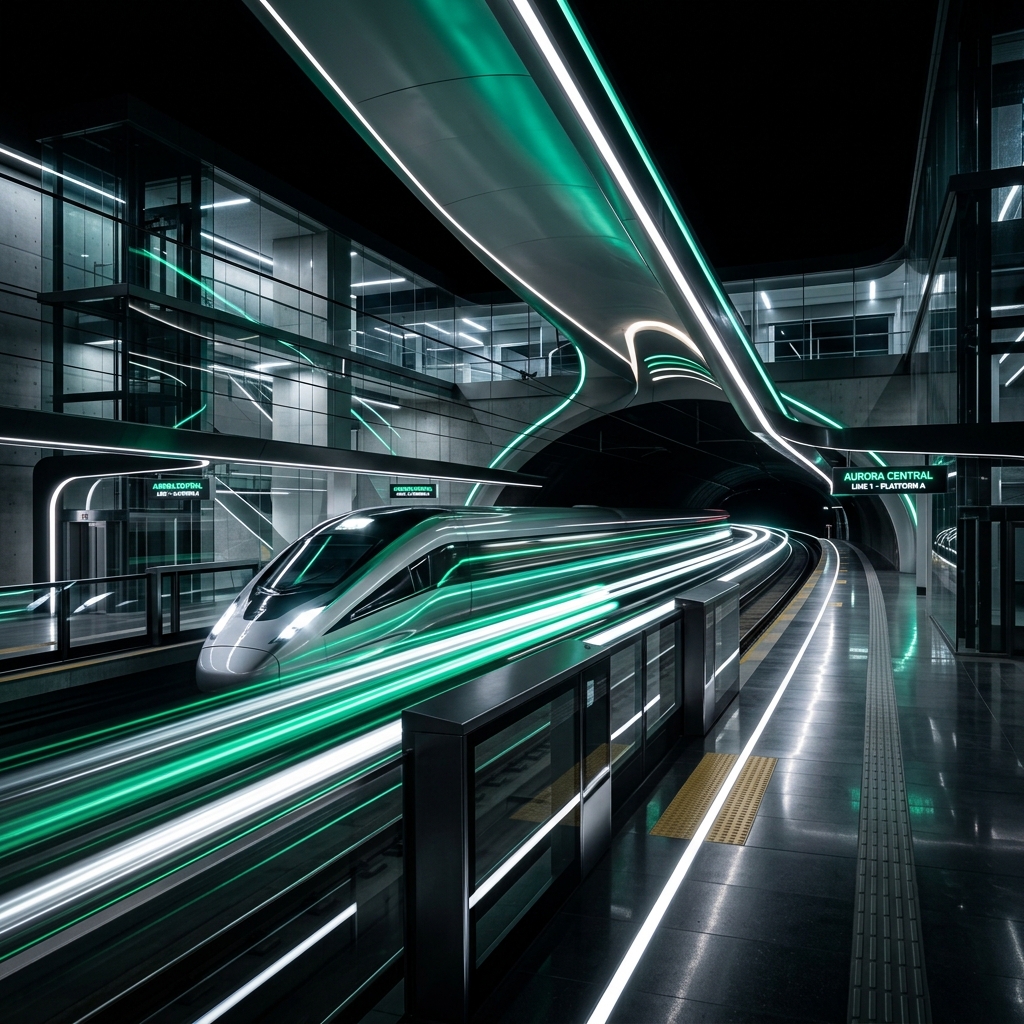
Rail & Transit Intelligence
Catch the incident before it reaches the platform. DHI turns your existing station and depot cameras into on-premises safety sensors that flag track trespass, platform-edge proximity, and crowd surge in under 150 milliseconds, routing every alert into the VMS your operators already watch.
Deployment Context
Rail & Transit Intelligence requires environment fit and immediate proof of value.
Verify how DHI integrates with your specific camera estate and VMS workflow before any on-site deployment happens.
Incident Latency
Trespass, platform-edge proximity, and surge alerts fire on the node in under 150 milliseconds, fast enough for the control room to intervene before a train arrives.
Camera Estate
DHI runs on the station and depot IP cameras you already operate over ONVIF and RTSP, with no rip-and-replace and no new sensor hardware on the platform.
VMS Workflow
Events arrive as standard ONVIF metadata inside the VMS operators already watch, so transit staff respond in their existing dashboards without learning new software.
Data Sovereignty
Raw passenger footage never leaves the station network. Only safety metadata moves between nodes, keeping the deployment air-gapped from the public internet.
Operator Fit
We confirm camera coverage, platform geometry, and alert routing up front, so you know exactly how DHI behaves in your stations before any rollout.
Direct answer
Why should transit safety AI run on premises?
Transit safety AI should run on premises because track, platform, and crowd events can require action before a cloud round trip finishes. DHI processes station and depot camera feeds locally and routes safety events into the VMS or control-room workflow already used by operators.
Rail-envelope fit
Track trespass and platform-edge events are location-specific. The model has to understand the mapped danger zone, not just whether something moved on camera.
Control-room fit
The useful output is a confirmed event with camera, platform, zone, and urgency context so operators can slow movement, dispatch staff, trigger PA, or escalate.
Crowd fit
Density and flow warnings matter most at choke points such as platform entries, stairwells, escalator landings, and tunnel mouths.
Pilot proof
A transit pilot should separate nuisance alerts from confirmed events and measure acknowledgement time against service conditions.
Pilot assumptions to validate
- The selected cameras clearly see the platform edge, track envelope, crowd choke point, or corridor boundary.
- Operators agree which event types interrupt the control room and which are logged for review.
- The VMS or dispatch workflow can show event location fast enough for station staff or train control to respond.
Rail operating risk
Transit safety depends on knowing exactly where a person is relative to the train path.
A rail camera is only useful for safety if the system understands the physical envelope: trackbed, platform edge, stairwell, tunnel mouth, yard boundary, and station choke point. DHI maps those zones locally and sends operators a structured event with the camera, location, and urgency they need inside the existing control-room workflow.
The danger zone is geometric
Track trespass and platform-edge alerts need mapped boundaries. A person on a platform is normal; a person past the warning line or in the trackbed is a different event.
Stations have bursty demand
Crowd risk changes with arrivals, delays, events, escalator outages, and weather. Density checks have to read the active flow, not just a static occupancy count.
Operators need location context
A useful alert should name the platform, track, stairwell, camera, and zone so staff can dispatch, slow movement, trigger PA, or escalate without searching.
High-risk zones
Where the first pilot should prove value.
Platform edge
Where slips, crowd pressure, and unsafe proximity can require action before train arrival.
Trackbed and right-of-way
Where confirmed human occupancy needs a different escalation path than ordinary platform movement.
Stairwells and escalator landings
Where crowd density can build quickly when service is delayed or directional flow changes.
Tunnel mouths
Where visibility, trespass risk, and train movement create compressed response windows.
Depots and yards
Where worker movement, rolling stock, maintenance zones, and restricted access overlap.
Station concourses
Where surge, loitering, person-down events, and route changes can strain staff attention.
Edge AI Capabilities
Neural models operating natively on the NVIDIA Jetson platform, delivering real-time safety signals without cloud dependency.
Track Trespass Detection
Flag a person entering the trackbed and distinguish a genuine trespasser from authorized maintenance crew, so control rooms act on real intrusions instead of false alarms.
Platform-Edge Safety
Watch the warning line for dangerous proximity, falls, and slips near moving trains, escalating the moment a passenger crosses into the danger zone.
Crowd Surge Management
Read platform and concourse density in real time to surface overcrowding and surge conditions before they become stampede risks.
Deployment model
Pilot the highest-risk station geometry first.
A transit pilot should prove one operational workflow in one mapped zone before expanding across stations, depots, and corridors.
Map the operating envelope
Define platform edge, trackbed, safe walkway, station boundary, and staff-only areas inside the camera view.
Set control-room rules
Decide which events interrupt operators, which trigger station staff, which can route to PA or signage, and which are logged for trend review.
Measure during service conditions
Evaluate alerts during normal service, peak traffic, delays, weather changes, and maintenance periods so the model is tested against real station behavior.
Pilot KPIs
Metrics a safety team can defend.
Transit teams cannot act on a generic person alert when the physical zone determines urgency.
The alert has to give operators enough context to act before the next train movement or crowd change.
Transit deployments need trust from operators who already handle high alarm volume.
Edge Integrity & VMS Native Integration
DHI transforms existing IP cameras into intelligent safety sensors. We deliver alerts natively into Milestone and Genetec, requiring zero additional cloud bandwidth.
NVIDIA Jetson AGX
Localized compute executes complex skeletal and object models at the source. Eliminate the cost and latency of cloud streaming.
Native Alert Protocol
Events stream as standard ONVIF metadata. Operators receive alerts in their existing dashboards without learning new software.
Air-Gapped Privacy
Raw CCTV footage never touches the public internet. Only safety metadata leaves the node, maintaining perfect data sovereignty.
Continue Exploring
How track trespass detection works
The neural logic that separates real trackbed intrusions from maintenance crews.
Platform-edge safety in detail
How edge AI watches the warning line for slips, falls, and dangerous proximity.
Crowd monitoring for transit
Reading concourse and platform density to head off surge and overcrowding.
Rail trespass case study
A field architecture pattern for edge detection on long rail corridors.
Why transit can't run safety on the cloud
The latency math behind processing platform video on-premises.
Deploy a rail & transit intelligence pilot.
Review supported cameras, VMS alert routing, and the specific measurable KPIs for your rail & transit safety ai environment.
Scale from 1 location to 100+ with zero cloud architectural changes.
Request a demo
See the flow on a real operating scenario and scope a pilot around one facility or corridor.
See deployment architecture
Review camera ingest, edge inference, alert routing, and what stays on-premises.
Get the implementation checklist
Download the deployment checklist buyers use before green-lighting an industrial AI pilot.
Talk to an engineer
Bring camera count, VMS constraints, latency expectations, and privacy requirements to a technical review.